Saturday, June 27, 2015

Summer Reads #2

The Water Knife by Paolo Bacigalupi
The newest book by the author of the hugely popular The Windup Girl,  Bacigalupi's novel is a shocking look into our future as it pertains to the issue of water.  Hmmm...water, a fairly innocuous entity, right?  However, look at every media report lately about this entity and you will see articles on water restrictions in California, the historical drought in the Southwest, not seen since the 1200's, and the farmers fighting for their water rights.  Bacigalupi takes this idea and twists it into his view of the future of California, Nevada, and Arizona as the aquifers built in the last ice age shrink into ever smaller stores. His story follows three main characters, each with their own agenda:  Angel, the title character of the book and the right-hand assassin for the megalomaniac who 'owns' Lake Mead and controls Las Vegas; Lucy, the reporter who lives in Phoenix and becomes a part of the dying city as she reports on the blood and murder found there; and last is Maria, a Texas refugee (Texas has lost all their water rights and has been virtually made extinct) who has no family and few friends, but gets pulled into a water war that will soon encompass them all.  I found this book to be very complex, especially at the beginning, needing great concentration to figure out exactly what is going on.  Water rights - who has them, who gets to keep them, and who is involved in stealing them - is rather complicated.  However, I am thankful I plowed through as the story begins to gel after the first third and I became engrossed in the saga of survival.  It is a pretty scary look at a more-than-possible future.


Alias Hook by Lisa Jensen AND  Dorothy Must Die by Danielle Paige
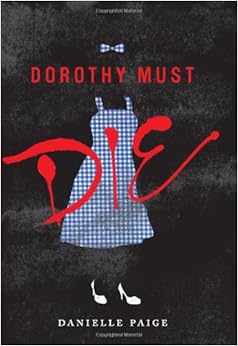
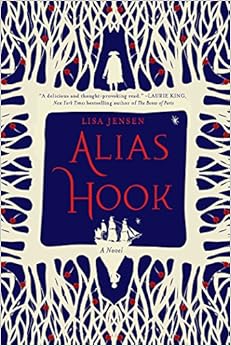
Sometimes, after a scary futuristic dystopic novel, one just needs to fly off to Never Land, or perhaps the Land of Oz, right? Except of course when those two places have been distorted, satirized, and 'magicked' into something else.  However, these two books were still a rollicking bit of fun, particularly if you were fans of the childhood books.  Jensen takes the original J.M. Barrie story of idyllic childhood and the boy who 'won't grow up', and turns him into a murderous, sadistic, hateful pre-teen.  Captain Hook, of course, is a misunderstood pirate - yet, not entirely sympathetic.  The story splits its setting between the 'now' of NeverLand and the past history of young James Hookbridge.  He was a spoilt, arrogant, wealthy young man, cursed to the fairy country and now a young woman has arrived to turn his world upside down.  Jensen does a solid job of using tidbits from the original story and the reader for Audible is spot-on with Hook's indolent, piratical, British accent.  For you Oz fans, Danielle Paige really nails this one.  For those ignorant of Oz (shame on you - they were my favorite childhood books), L. Frank Baum wrote a dozen books, chronicling the tales not only of Dorothy, but of Ozma, the real ruler of Oz, and the numerous sidekicks along the way.  In Paige's new version of the story, a young modern-day Kansas girl, Amy Gumm, is whisked to Oz in a twister, of course, and comes to find all the magic gone.  Dorothy actually returned to Oz, after realizing what a dump Kansas was, and has pretty much trashed the place with her obsession for magic and power.  The 'wicked' witches are now the 'good' witches, thus the story commences to rid the land of the terrible influences of Dorothy and her three henchmen,  the Scarecrow, Lion, and Tin Woodman.  Paige is masterful at using all the characters from the Baum books, and I admittedly got a big kick out of that.  You will love this book if you once lived in Oz as a child like I did - if not, probably not so much.

Syndrome E and Bred to Kill by Franck Thilliez
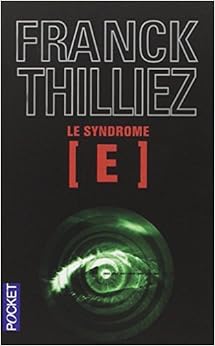
If you are in the mood for a fabulous new detective/murder mystery series, in the style of Jo Nesbo and his character Harry Hole, I would say that Franck Thilliez is the latest great author.  First, he has created two complex characters whom you both love, and want to strangle occasionally.  Franck Sharko is an older detective, a schizophrenic who obsesses over toy railroads and talks to his imaginary friend, Eugenie, in the most inappropriate public places.  Scharko battles his superiors, goes about his business in a completely unorthodox way, and sees the smallest clues to solve the mysteries.  In the first book, Syndrome E, five dead bodies and a shocking snuff film come together to lead Sharko to Lille, Paris, and even Montreal.  Luci Henibelle, a young detective with twin daughters and an obsessive curiosity, becomes his de-facto partner as they unravel the idea of 'syndrome e.'  In the sequel, Bred to Kill, the two reluctantly pair up again, as tragedy has struck them both, and find a trail of blood, murder, and insanity that leads them to the jungles of Brazil.  Thilliez weaves in mysterious and undetectable trails that lead the reader to draw incorrect conclusions, and then shows them the way out.  These mysteries are incredibly well written, taut, psychologically thrilling, and just darn good stories - I highly recommend them both and look forward to the third in the series finally being translated from the original French.
Freedom's Child by Jax Miller
This book is a getting quite a bit of buzz out their on the book blogosphere, and I would wholeheartedly agree that it is a solid thriller.  It is a fast read, with some intriguing characters.  Freedom Oliver, the main character, has been in the witness protection program for many years, hanging in podunk Oregon, running a bar, and getting blackout drunk most evenings.  Unfortunately for her, the main who spent 17 years in jail for a murder he did not commit, has now been released...and knows where she is.  Once this scene is set, the story flips back and forth between the present day as Freedom makes her way back 'home' to find her daughter, and the long ago days of being a wife to a Boston bad-boy.  While it is not the most complex story, it is a great beach read and definitely a page-turner.  I would not recommend it for a book club, as I don't think it has enough 'meat on the bone' for discussion; it is more pure entertainment.

Church of Marvels by Leslie Parry
This book had all the pieces needed for me to want to borrow it:  Coney Island tent show with illusionists, contortionists, and other tortured souls; turn-of-the-century New York City; an insane asylum; and a mysterious newborn baby found in the muck.  Parry pops back and forth amongst the characters, as we see Alphie, a young married woman imprisoned unlawfully in the asylum, stuck on an island in full view of the city, waiting for her handsome husband to find out the 'real' truth from his mother and rescue her.  Odile Church is another voice, as she searches for her sister Belle after a terrifying tent fire on Coney Island takes away not only their mother, but the only home and family they have ever known.  The last voice of Sylvan, the Irish muckraker who finds the babe, is the voice of reason who eventually pulls all the strings of the varied stories together.  Parry puts some nice twists and turns in during the final chapters, consequences I never saw coming, so I was rather impressed.  This was a solid debut novel, and one that could bring up interesting conversation for a book club.

Close Your Eyes, Hold Hands by Chris Bohjalian
This is a difficult review for me to write, as I am unsure exactly where I stand on this particular book.  Normally, I am a huge fan of Chris Bohjalian; Sandcastle Girls, a novel of the Armenia holocaust, was one of the most powerful books of the past decade for me.  This latest book is a dystopic novel, looking at the East coast of America and the consequences of a nuclear power plant meltdown.  Admittedly, one of the main problems for me was the narrator on Audible.  Talk about a buzz kill...my dog could have done a better job, or a computer-activated voice, which is what she sounded like.  Monotone, completely devoid of emotion, and slow as molasses, this is a definite 'do not recommend' as far as listening goes.  However, I was not a huge fan of the writing style either.  Bohjalian creates an intriguing and complex main character in Emily Shepherd, the daughter of the head engineer at the nuclear plant that implodes.  Yet as the story moves all over the place, both in time and space, it can occasionally be confusing, as Emily writes in her journal, telling us of her past, dropping in tidbits on Emily Dickinson (those I enjoyed), and her relationships with a variety of people.  Emily seems to be suffering not only from guilt and separation from her parents and the life she knew, but also from some mental illness that was evident prior to the meltdown. However, Bohjalian never directly addresses that nor does he look at the larger consequences. For me, the singular voice of Emily was a detriment to the unraveling of the story.

Wednesday, May 27, 2015

Summer Reads #1 - REDO

The Paris Architect  by Charles Belfoure
I have seen this book on numerous 2015 lists, and great book club choice lists as well; I would whole-heartedly concur.  Written more in the style of All the Light I Cannot See, this is a beautiful tale of WWII and the Parisian people involved in the conflict.  Belfoure creates complex characters who are not always likable, but who are vulnerable, selfish, loyal, patriotic, anti-semitic, self-sacrificing, and all together human.  Lucien, the title character of the novel, is hired by a wealthy Parisian to create hiding places for Jews who are no longer able to escape Nazi-occupied Paris.  Inherently anti-semitic, Lucien first agrees in order to earn the outrageously large fee, but ultimately gets pulled in by the creativity this task requires - to devise a hiding place that even the most discerning SS officer cannot find.  The characters we meet are intriguing:  Hertzog, the Nazi soldier with an artist's soul; Adele, the fashion designer who will do anything to survive; Bette, the beautiful model with a hidden secret; and the many different Jewish prisoners whom Lucien attempts to save.  This story is fascinating and compelling, with some lovely twists in the end - I highly recommend it.

Carry the Sky by Kate Gray
It is truly hard to find words to describe this book, as it is almost seems to be part poetry, part novel.  Kate Gray, a talented and award-winning poet from Oregon, has taken her own life experiences and written a gorgeous, heart-breaking, and poignant tale of life in 1983 in a college preparatory boarding school.  The tale is recounted by two of the main characters:  Jack Song, a young Korean-American physics teacher and Taylor Alta, the new girl's crew coach at St. Timothy's.  Song's side of the story is constantly told through poetic use of physics - I know, that sounds like an oxymoron, a poetic physics story?  But he pulls it off with aplomb, making the reader consider the pull and drag not only of physical elements, but of human emotions.  His dealings with the student who just does not fit in, his inappropriate relationship with an unstable student, as well as Song's struggles with his sister's death, explores some very deep questions about life and responsibility. Alta's side of the story is heart-wrenching, as Gray takes us deep into her mind as she is tortured by the death of the woman she loves, as the police continue to look for her body in the very river where Alta's team rows each morning, as well as her guilt about her own sexuality.  I will be honest - this is not a heartwarming, uplifting, sweet story. It is painful at times to see into the recesses of one's heart, and as the story unfolds, you will find little redemption.  However, it is truly one of the most beautifully written books I have read in years, and deeply involved me in the lives of these characters.  This was a five-star book for me, a rating I rarely give.  I suspect it will be overlooked for awards, as it is written by an obscure Oregon writer; that is a big mistake - it is a very special book.

Euphoria by Lily King
This was a strange and different book, and I was not sure I was truly going to like it until I was about one third of the way through.  It has earned tons of accolades and numerous awards, and now that it is completed, I do understand why.  It is gorgeously written, and it is not a 'cookie-cutter' type of book; it has a unique focus and very different characters.  First is Nell, the bad-ass anthropologist who already has a published and popular book; she is a cypher, as she is on one hand a truly gifted scientist, able to understand the nature of the native people and to form familial bonds with them in a short amount of time. However, she also seems to be ignorant of her own bonds with her husband, Fen, and one wonders why the two are actually together.  The third part of this triangle is Bankson, the son of English gentry, the last of his male line due to illness, war, and suicide.  The push and pull amongst these three moves the story along to its final, shocking crescendo.  I look forward to our book club discussion of this intriguing, and rather different tale of these three scientists and the natives of New Guinea.

Fourth of July Creek by Smith Henderson
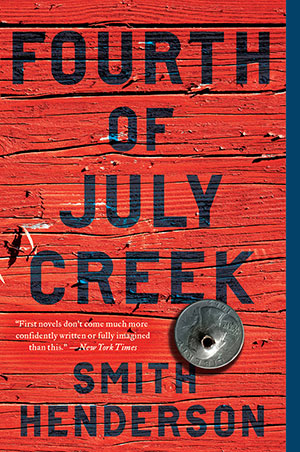
Winner of an emerging writer award, I look forward to seeing more by Henderson, as this was a fabulous first effort.  To be honest, I felt it could have been about 100 pages shorter (more judicious editing perhaps?).  However, I still found it to be a page-turning rollicking good story.  The main character, Pete Snow, is a social worker who attempts to solve each child's disastrous life; unfortunately, Pete has his own disaster of a life with an ex-wife who has taken their thirteen year old daughter to Texas, for no apparent reason other than to party for weeks on end, his brother who is on the run due to a warrant for his arrest, and a distant father and rather bitchy stepmother.  Amidst Pete's own traumas, in walk the Pearls, a father and son who are trying to live off the grid, but are doing so rather unsuccessfully.  As Pete gets pulled into their intriguing lifestyle of paranoia and government hatred, he begins to question what makes a family whole and what truly breaks them apart.  This is a compelling story.


Missing Reels by Farran Smith Nehme
Remember those old Hepburn and Tracy movies, where they quibbled, and teased, and angered each other, and the dialogue was snappy and delicious?  Yep, that would be this book.  Read in just one day (okay, I was home sick but it was still an obsessive read), Nehme knows her stuff about the cinema.  She should - she's a movie blogger on old films, as well as a regular contributor to film magazines.  Missing Reels is her first novel, and I do hope she keeps writing them - she's good.  The main character is Ceinwen(pronounced Kine-Wen), a young girl from Mississippi who is obsessed with looking like Jean Harlow, works at a vintage clothing store, and lives in a sketchy apartment with two of the most adorable gay roommates ever.  Her downstairs neighbor is Miriam, a film star from the 'pre'- talkie era, who is dying to see a full copy of the only film she ever made.  Hence, the hunt begins.  Pulled into this mystery is a quirky NYU math professor, Matthew, who has a snobbish and mostly-absent fiancee; with Ceinwen, Nehme has created a dynamic duo. These two have the best dialogue in the book as they painstakingly go back through time in their hunt for the 'missing reels.'  Nehme creates a cast of wonderful sidekicks that help the two young lovers along the way, and has a satisfying ending.  If you're looking for an entertaining summer read, I would highly recommend this one.


Thursday, May 14, 2015

A Man Called Ove by Fredrik Bachman
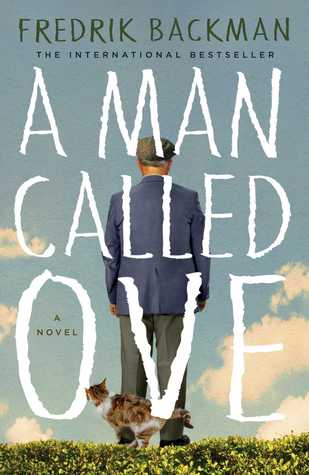
I'm going to bet we have all had that cranky, curmudgeonly old man in a neighborhood.  You know...that man who seems to make everything his business, the kids are always too loud and bothersome, and he doesn't want any changes.  Yep, that is Ove.  However, this delightful Swedish novel is so much more than some grumpy old fart.  As I listened to this book on Audible, I laughed out loud more times than I could count, felt my eyes well up a few times as well, and realized that Ove was actually...my own father, who I miss every day over the nine years since he died.  You see, Ove is a widower who desperately misses his wife who has recently passed away.  Amidst his frequent tries at suicide (hilariously unsuccessful, and that's not to take suicide lightly - it's just Ove!), Ove meets his new neighbors: Patrick, a fumbled-finger executive who is incapable of being a 'fixer-upper', a sin in Ove's eyes; Parvana, the East Indian immigrant wife, with two snappy lil girls in tow and another child on the way; a cat rescued from a snow bank; and a few other 'odds and ends' of characters who make up Ove's surroundings.  As Bachman weaves his tale of how a lifelong curmudgeon finds his way back to love and friendship, we see Ove's past and how he came to be 'Ove.'  I have not loved a book this much since The Unlikely Pilgramage of Harold Frye.  It is a dear, delightful, heartwarming story of life and the humanity that peoples our world.

You Should Have Known by Jean Hanff Korelitz
I'm not sure how I missed this little gem which was on the New York Times bestseller list for quite some time. It has all the requisite ingredients of a thriller that is bound to pull one in:  a creepy little sociopath, a confused and ignorant wife, a school setting with impossibly snobby parents, a sympathetic victim, and a question mark throughout of what is true and what is fiction.  The main character of the book, Grace, is a composed, intelligent woman who works as a marriage therapist and has been married eighteen years, with a twelve year old son in a posh private school.  On the eve of publishing her first book, titled "You Should Have Known," the horse manure hits the fan at Rearden Prep School.  Having written a text on how marital problems are not formed within a marriage, but are a product of women just choosing poorly, Grace has to confront her own beliefs on what her marriage is, and is not.  Korelitz writes a taut story with little extraneous fluff; it reads quickly and obsessively.  This could be an intriguing choice for a book club who is willing to delve into some provocative ideas of marriage, friendship, and how the two intertwine.

The Boston Girl by Anita Diamant
For those of you who read Diamant's The Red Tent (one of my favs in the last decade), you will not be disappointed in her latest novel.  And if you like to listen to books on Audible, absolutely download this one.  It is read by Linda Laven (of Alice's Restaurant fame) and she nails the Boston-Jewish accent - I felt like I was watching a movie in my head.  Let me tell you first what The Boston Girl is not; it is not a mystery, nor a thriller, nor family drama per say.  It is a historical fiction that delves deeply into the character of Addy Baum, a young Jewish girl in Boston where the story begins in 1916.  The 85 year old Addy is telling her grandaughter the story of her life for a school project, and just like her family, we get drawn deeply into Addy's tale of a Jewish immigrant and her surrounding friends and family.  We hear of WWI and the soldiers with shell shock, of the Spanish flu pandemic, the child labor issues, the search for more education, and of course, a man to love.  Addy is heartwarmingly honest with her granddaughter, and is also wryly funny - there are many laugh-out-loud moments, especially concerning her mother who does nothing but complain, while she loves her daughters so hard.  This was a seriously delightful book; I felt bereft as the book finished, as if I had lost touch with my good friend, Addy Baum.  Ah, what a beautiful thing it is to feel as if the characters are truly alive.

Bittersweet by Miranda Beverly-Whittemore
Unless you were that perfectly gorgeous, shockingly smart, and sickeningly wealthy friend in college, we all have seen those people on campus, or read about them in People magazine.  Who wouldn't want to be part of their secret circle of friends?  In Beverly-Whittemore's novel, we meet the Winslows, the family who has everything:  beauty, money, bloodline, and more importantly, a private little family compound called Winlock, where all the relatives encamp each summer.  The protagonist of the book is fittingly called Mabel, an overweight, awkward, lower-class girl who just so happens to be college roommates with...yep, a Winslow.  Over the course of this summer in Vermont, Mabel (and the reader) meet the eccentric and highly addictive family of the Winslows: the crazy aunt, the creepy patriarch, the ice-queen mother, the hot brother, and the cousins who all look shockingly alike.  What is really going on in Winlock and in Bittersweet, the cottage that Ev and Mabel share?  This book is an intriguing thriller with some nice little twists and turns.

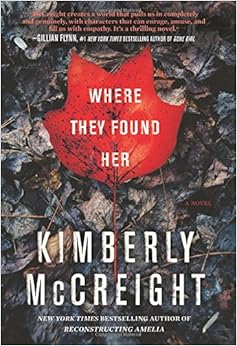
Where They Found Her by Kimberly McCreight
One of my favorite books last year was McCreight's Reconstructing Amelia, a book about a high schooler's death and her mother's search for the truth.  McCreight used a variety of sources to tell that story: text messages, emails, blog sites, etc.  It was a unique writing style that I not only admired, but I felt was more fitting for today's teenager. Her second novel is another page turner.  The main character, Molly Sanderson, is an ex-attorney, want-to-be reporter who is just recovering from a severe depression due to the loss of a child.  Enter the murder in her small New York college town - a newborn's body is found out in the woods.  Thus the search for the mother/murderer begins.  A variety of characters people McCreight's story: Molly's husband, Justin, and English prof at the local college; the wild divorcee with a troubled son; the 'perfect' mother with the two 'perfect' children; the strong-jawed police chief who grew up in the town and has a history; and the kindergartners and high school kids who turn the story all sorts of intriguing directions.  This is a fascinating thriller that brings up questions of guilt, parenting styles, and how our past affects our today - highly recommend.

The Hotel on Place Vendome: Life, Death, and Betrayal at the Hotel Ritz in Paris by Tilar J. Mazzeo
After reading so many fiction books on France and Paris in preparation for the big trip this summer, I figured it was time for some factual info.  This book reads like a real-life People magazine, interspersed with historical facts and trivia.  The main setting is the world-famous Ritz hotel in Paris, the gathering spot for decades for all the famous people and glitterati in the world (and yes, this is where Princess Diane was staying when chased to her death by the paparazzi).  The Lost Generation (Gertrude Stein, Ezra Pound, Ernest Hemingway, F. Scott Fitzgerald, etc.) frequented its bar in the 1920's, and Coco Chanel lived there for many years leading up to the German invasion.  The focus for this book is the last few months of the occupation and follows a variety of people, both ones you know and ones that are merely bookmarks in history.  I learned a ton about the occupation and the Parisian participation, or lack there of, in the resistance,  I also gleaned facts about the famous Valkyrie plot to kill Hitler (yep, it was hatched in the bar at the Ritz), and the secret meetings often held in the salon.  Mazzeo drops waaaaay too many names constantly - I stopped trying to keep them all straight and just read for the story.  Short chapters that focus on one person/group of people helped.  If you're visiting Paris anytime soon, this is a great read.

Sunday, April 26, 2015

April Showers...of books!

I am Pilgrim by Terry Hayes
This book has hit it big:  New York Times bestseller for weeks on end, every person I see in a doctor's waiting area seems to be reading it, and it is all over airport bookstores.  However, the number one reason I know it is something special is that my husband literally could not pull his face out of it for days...March madness basketball, a visit from his daughter who lives in LA, and constantly sad looks from his dog that wanted to play ball... nothing else but finishing this book seemed to matter.  And once I picked up this book, I could see why.  It is a rollicking good read, a mind-numbing thriller, and a page turner to the degree that dinner did not get cooked for three days.  Yes, a book that is over six hundred pages took me just three days to read; that's what happens when one reads obsessively.  Here's the basics of the plot line:  A defunct American spy gets pulled into a murder scene by his NYPD pal; a Saudi Arabian sees his father beheaded years ago and is a titch angry; a loyal Turkish policewoman raises a mentally challenged boy; a rich young husband mysteriously dies in a palatial estate on the Turkish seaside.  Anything more than that and I might give something away.  Needless to say, this is a five-star, can't miss, read it on vacation or in the library or standing on your head - you won't be sorry.

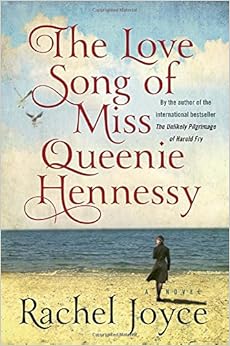
The Love Song of Miss Queenie Hennessy by Rachel Joyce
For those of you who read and loved The Unlikely Pilgrimage of Harold Frye, Joyce has now written what she calls a 'companion' book.  It is not a sequel, yet I question whether it could stand alone or be read before Harold.  Joyce's first book was utterly delightful, following an older English gentleman who goes out one day to mail a letter to an old friend, Queenie Hennessey, and realizes he has done her a terrible wrong years ago so he begins to walk, hundreds of miles, to her deathbed.  In this companion book, we see the story from Queenie's point of view: the terrible death of Harold's son David and Queenie's role in it; the aftermath and the job loss; the construction of Queenie's sea garden; and most importantly, her time spent in the hospice house as she dies a slow, agonizing death from a cancer that has stolen her ability to speak.  We hear her story through her journal, and we see the wild and crazy characters who live, and die, with her in this lovely home staffed by kindly nuns.  For anyone who has volunteered for hospice care, you will see your life reflected here.  It is a beautiful, poignant story told through the eyes of a very special woman.  It is narrated on Audible by a deliciously British-accented woman.  It is just a lovely book; if you enjoyed Harold Frye,  I strongly recommend it.

Running the Rift by Naomi Benaron
Having read about this book on one of the many "award-winners" lists in December, I was compelled to check out the winner of the Bellwether Prize for Social Engagement.  Written by a UCLA professor who has worked extensively with Rwandan genocide survivor groups in Rwanda, Benaron is a uniquely knowledgable and gifted writer.  She has crafted a beautifully told story about the years leading up to the horrific time in 1995 where over a million Tutsis were slain by the Hutus in their own country.  The story follows Jean Patrick, a Tutsi boy and gifted runner, who has been groomed for years to become the great Olympic hope not just for Rwanda, but for his tribe. This book is a slow roller, with the first eighty pages slowly building the characters and the setting, and make no mistake, the setting of Rwanda, its cities and countryside, plays the role of a main character as well as the boys who inhabit it.  Benaron can write, I mean really write, with the lyrical style of Alan Paton who wrote of Africa as well, in Cry the Beloved Country.  As the boys grow up and we start to see Rwanda devolve into tribal factions, the story picks up pace and unfolds in a tragic, yet redemptive way.  This book is a perfect example of my motto:  The More You Read, the Smarter You Get.  It would be a powerful book for a classroom, or a book club, as it will not leave your memory any time soon.

Men We Reaped by Jesmyn Ward
This is another book that is timely, politically charged, and I believe, a book that should have a wider audience.  Written by a professor, who grew up in a small Mississippi town on the border of Louisiana, Ward tells of the five deaths in this black township that changed her life and the lives of many of its citizens.  It seems so simple and straight forward, but it is not; this is Ward's view into a world that exists only for poor black people, a world that does not really exist here in the Pacific Northwest or even on the West Coast.  This small town lives, breathes, and dies together; the children grow up with their cousins, pop in and out of each others' homes depending on the happenings in their families, and as readers, we slowly see the insidious effect poverty has on the young men in particular.  Most of the dead boys dropped out of school after being seen as stupid, lazy, or incapable of learning.  As a former teacher, I know the power expectations, high or low, has on a student and as a reader, we see the powerful effect this lack of education has on their future, or lack thereof.  Ward escapes, but with each death, she is sucked back in by the dominant pull of the South and of family.  She finishes her autobiographical tale with the story of her brother's death, and it is a poignant, heartbreaking sign of what is happening still today in poor townships down South.  This could be an intriguing book club choice that would garner some provocative discussions; it is also a strong companion book to Bryan Stevenson's book Just Mercy.  

Better by Atul Gwande
Having read Being Mortal last month (see review - truly amazing book), I decided to go back and explore some of Gwande's older books.  I admit, I love his writing; he could write a grocery list that is a page-turner, as far as I'm concerned.  Better looks at a variety of different areas in medicine, where he believes doctors, nurses, and the medical community in general, could do better.  He follows some fascinating story lines:  the push to end polio in India and how the aid workers combat outbreaks; what hospitals do for cystic fibrosis patients, which morphs into how data is collected and communicated to patients; surgical survival in the armed forces and how it has been improved; and the simple, yet difficult task, of merely washing one's hands.  This is a quick read, coming in at under 300 pages, which is a nice change of pace.  It is a truly fascinating look at the inner works of medicine and what can be done to make it...better.


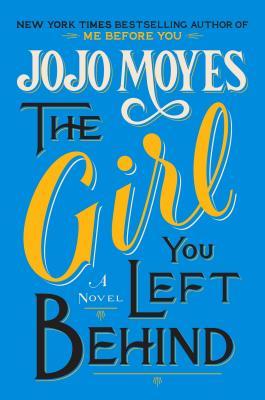
The Girl You Left Behind by Jojo Moyes
Granted, I absolutely loved Moyes' book Me Before You; that book dealt with powerful issues of assisted suicide, what we value in life, and who we choose to love.  I was not sure that another book by her would live up to my enjoyment of her previous book. I have to say, I was not enamored with the first fifty or so pages.  The story begins during WWI, in a country village in France, as two sisters try to run a small inn and restaurant while their husbands are away at war.  Enter the stereotypical 'bad Germans,' the desperate search for food, the mayor's sick child - the cliches abounded and I almost gave up.  However...I am glad I stuck with it.  Once the story hit modern day and the cliches disappeared, the plot thickened and sucked me in.  Enter the new main character, Liv, a young widow whose life is pretty much a disaster.  All she has is the beautiful flat her architect husband left her and the painting they bought on their honeymoon.  As the secrets and mystery swirl around the painting, involving lawyers, detectives, and the always-ugly public media, that is when the plot takes hold.  I ended up thoroughly enjoying this book.  I do not think it would elicit deep and thoughtful book club conversations, but I do think it's just great brain candy and a good vacation read.

Finding Jake by Bryan Reardon
As I read the plot summary for this book, I wondered if I really needed to read another book on school shootings.  Considering we've had over a hundred just since Newtown, I thought it would be frustratingly depressing.  I had already read Jodi Picoult's Nineteen Minutes and David Cullen's journalistic bestseller Columbine; did I really need one more?  Yet, I found Reardon's take on a school shooting to be fascinating, well-written, and cogent to what occurs in childrens' social structures.  The story follows one family: stay-at-home dad who struggles with extreme shyness and his role as the homemaker; high-powered attorney mother who tries to be an involved parent; shy but morally intelligent son named Jake; and socially adept daughter.  The story flips back and forth between time periods, showing us the years of raising Jake and his pivotal childhood social structures, and the powerfully charged moment of the school shooting and its aftermath, both in the neighborhood and in the media.  This story takes some provocative twists and turns, and leads to places that are unexpected.  I cruised through this book in a day, thoroughly enjoying every page.

A Pleasure and a Calling by Phil Hogan
This book is difficult to describe.  It is not a mystery, nor a family drama; it is not non-fiction, though it almost reads like it; it is not comedy, though I did suffer a few deliciously evil giggles at inappropriate places.  The story is told from the viewpoint of Mr. Hemmings, a middle-aged land agent in rural England, who knows every house, every family, every secret in his tiny little town.  How, one may ask? Because Mr. Hemmings keeps all the keys as he lists, exploits, and sells each home, each business, and each apartment.  He gleans information from frequent secretive visits back to their abodes, or on his stalker-ish nightly visits, and satisfies his urges by reading through his copious files on said clients.  As he tells his story of one man, Mr. Sharp, who is rude to him one day on a walk and the fallout of this breach of etiquette, the reader comes to see the brilliant sociopathic nature of Mr. Hemmings.  We see the entire story from his brain, with very little dialogue and little character development other than this narrator.  Mr. Hemmings also gives us a look into his childhood and teen years so we can see how his 'habits' were formed.  I found this to be a rather delightfully wicked book, as I found myself actually cheering for this nasty little man and holding my breath to see if and when he was caught.  I actually think it could bring about some 'wicked' good conversations at a book club about privacy, delusions, and how one's past affects one's present.  I thoroughly enjoyed this twisted tale.


Sunday, March 22, 2015

Books for March

Dead Wake by Erik Larson
Any book lover who lives in the Pacific Northwest, knows Erik Larson.  The writer of spectacular non-fiction books on specific pivotal moments in history has written another fascinating book, this time looking at the sinking of the Lusitania in May of 1915.  I have been intrigued by his stories in the past:  Isaac's Storm - his look at the devastating Galveston hurricane at the turn of the century; Thunderstruck - the detailed journey of Marconi's invention of the wireless; The Devil in the White City - the juxtaposed stories of a prolific serial killer and the Chicago world's fair; and In the Garden of the Beast, the tale of the American ambassador and his family in Berlin during the rise of Hitler.  Each and every one of these books was meticulously well-written and deeply researched.  Larson does it again in Dead Wake.  He follows the story lines of some of the intriguing, and occasionally famous, passengers, as well as crew members, the British secret service, and the U-boat commander himself.  We are given details from captains' logs, passengers diaries, telegraphs, and letters, all placed together in a fashion to keep one turning pages.  Although we all know the torpedo hits and sinks the boats, I found myself breathlessly turning the last 100 pages, to see who lives and who dies, who is found responsible, and how America is reluctantly dragged into a war across the sea.  You will not only learn a great deal from this book, but you will be highly entertained.  (Warning:  it took me about 50 pages to get pulled into the story)

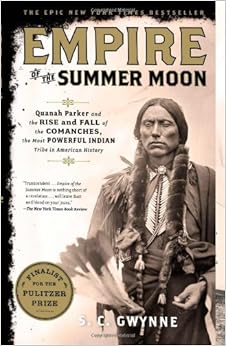
Evening of the Summer Moon by S.C. Gwynne
Sticking with the non-fiction trend, this tale of the end of the Plains native tribes, most specifically the Comanche, was a shockingly fascinating read.  Perhaps because when I grew up in the Northwest, kids studied Native Americans pretty much all the way through school, especially Sacajawea with the Lewis-and-Clark expedition.  After elementary school, I became obsessed with the Sioux and the destruction of Custer at the Little Big Horn.  (I know - I was a weird kid).  Then, as an adult I read a book on the massacre at Wounded Knee, and eventually the book Lies My Teacher Taught Me, which really detailed the destruction of the native people in North America.  With all this background, I was intrigued by this Dallas reporter's book on the dying days of the Comanche tribe, the greatest horseback warriors this world has probably ever seen.  They were lead in their dying days by a man whose mother was a white woman, kidnapped as a child and adopted into the tribe.  Add in some noble soldier and natives, as well as some pretty despicable ones, as well as the dishonesty and lies of both sides, and you've got a great tale.  With that said, do not expect a novel-based book; this is definitely an historical text.  When first looking at the pages, realizing little to no dialogue existed, I was a bit nervous about the author's ability to pull me into the story, but the story itself is just so fascinating I read the book in just three days...and it is dense.  Gwyne has done his research and shows in great detail what happens in the space of just one hundred years, of what occurs when a stone age people such as the Plains tribes, who were still in the hunter-gatherer part of evolution, meets the agricultural people of another millennium.  Tough to digest in some places but an altogether great learning experiences. 

The Professor by Robert Bailey
Remember the time, many years ago, when you picked up John Grisham's first bestseller, The Firm, and you were completely incapable of putting it down until you got to the very last page?  It didn't matter that it wasn't written like Fitzgerald or Morrison; you weren't looking for 'pretty' writing, just a darn good story.  Well...Bailey's latest book about a new team of lawyers will make you feel that way again.  We first meet Tom McMurtrie, the renowned professor of evidence at the University of Alabama law school, as he prepares for a difficult meeting with the school board.  Having played on Bear Bryant's national championship football team and having literally written the textbook on evidence, this man is an entity unto himself.  However, throw an illness, a lie, and a treacherous friend, and the story gets going.  Next, mix in a young brash lawyer with a difficult past with Professor McMurtrie and his young beautiful clerk.  Then, stir in a terrible and tragic car crash with a nasty trucking company.  And voila - you have a page turner that is literally impossible to put down.  It's not perfect writing, but it's not bad.  It's not always politically correct, but it tries.  It's not the next Pulitzer prize winner, but it doesn't matter - it's just really good. 
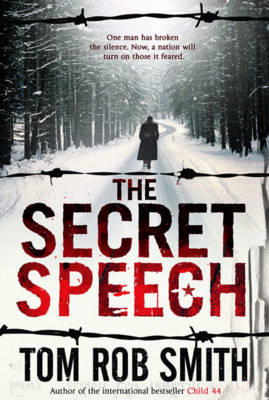
The Secret Speech by Tom Robb Smith
The second in the Child 44 series, Smith seriously hit another home run.  Quite often, I find the second book not as good as the first, but occasionally (like the Girl with the Dragon Tattoo series), an author can continue the momentum.  And if you haven't read Child 44, do so - however, this thriller can also stand alone.  Leo, the ex-KGB officer and current homicide detective, is back in Moscow, living with his wife who now finds herself in love with her newly-reformed husband.  Together, they are raising the two daughters of the falsely-accused criminal who Leo arrested and ultimately saw murdered.  Needless to say, the oldest daughter is less than thrilled to be with the man she considers a killer, creating a tense family life. However, Stalin is now dead and Kruschev has now taken over, with a 'secret speech' that pretty much throws Stalin under the bus and decries the past abuses by the secret police.  This opens the door to a new serial killer - a gang of previously imprisoned dissidents from the Gulag who are hunting down their former tormentors.  The story takes us into the streets of Moscow, to the gulag prisons in Siberia, and even the spring rebellion in Budapest.  The history of those early days of the Soviet Bloc is fascinating and Smith has created complex characters and no-win situations to heighten the suspense.  This book was another five-star for me, and yes, I will be reading the third and last installment soon.

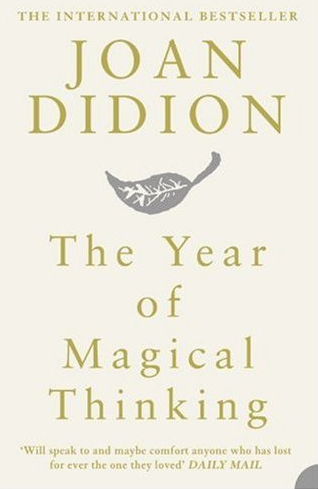
The Year of Magical Thinking by Joan Didion
After falling in love with the End of Life Book Club last fall, I have tried to commit to reading at least one 'must-read, classic, prize-winner, good-for-your-brain" book a month.  This was the March pick - the autobiographical look at a year of tragedy in author Joan Didion's life.  As her daughter lies in the ICU, deathly ill from sepsis, her husband sits down to dinner and literally drops his head to the table and is gone in seconds from a massive heart attack.  This is the story of how she survives sudden widowhood, as well as how she recreates a life for herself.  It is interspersed with many details of her rather fabulous and famous life with her husband.  Both writers for novels and Hollywood, famous people inhabit some of their past days as you see how her life was shaped by her relationship with him.  It is a painfully honest book about how one grieves, and how the world expects one to act which is often two opposing directions.  It is not a long book, but it is a book that will stay with you for quite some time.  I would recommend this to someone who has lost a loved one, or has a close friend/relative who is grieving; it gives us a world into a bereaved soul that is powerful and poetically written.

Everything I Never Told You by Celeste Ng
This is a 'throwback' story, one from forty years ago that some of us in 'middle-age' may recognize.  It is the story of a family who does not belong in their neighborhood due to race.  However, your first thought is probably issues of black and white and the civil rights movement, but you would be wrong.   Author Celeste Ng takes this idea and twists it around, to the story of a family with a Chinese father and a Caucasian mother, raising mixed race children in the middle of small-town Ohio back in the 1970's.  What is a seemingly simplistic story lines - oldest daughter drowns in lake and police do not know why - become far more complex as the author creates characters with demons and hopes and passions that you would never think possible.  First is the father, a child of immigrants who never quite feels like he fits in, and often doesn't fit in due to institutionalized racism.  His wife Marilyn has not spoken to her mother since her marriage, carries deeply bitter feelings about her own life choices, and has rather questionable parenting techniques.  The older brother merely wants to get away...but it is far deeper than that as one comes to find out.  The youngest child is a bit of a cypher not only to the reader, but also to the rest of the family.  As Ng strings out the details of their past lives and all the secrets inside their hearts that were never expressed, it paints a picture of a complicated family life that was doomed to lead to tragedy.  This is an intriguing book that I think would lead to some intriguing book club discussions.

Cant We Talk About Something More Pleasant? by Roz Chast
Remember the book Being Mortal that I reviewed last month - the one that is life-changing, about aging and how we choose to die? Beautifully written, incredibly researched, and poignantly told by a doctor with aging parents himself...well, this is the funny side of that book, honestly.  Roz Chast is a renowned cartoonist, frequently featured in the New Yorker.  She has created a graphic novel/cartoon-ish type of book that invites us on her journey as her parents age.  As the story begins, we meet the parents - children of Jewish immigrants, residents of their NYC apartment for 48 years, parents of an only child (Roz), and stubbornly refusing to see their life change as their health fails.  Roz nails it as she recounts conversations about how often and how long she visits, what her parents think of the assisted living places they visit, and what it's like to take care of her addled father while her mother is in the hospital.  While I found myself laughing out loud, I also cringed inside frequently as I recognized myself.  Roz strives to find that balance between being a good daughter and having her own life, never an easy thing.  This book is a must-read for anyone dealing with aging parents; it will remind you to smile, to be be more patient, and to remember we are not perfect, just trying to make the last days a little better.

The Book of Strange New Things by Michael Faber
I saved this book for last, as I am still torn about my actual opinion of it.  It has received rave reviews everywhere as Faber's 'masterpiece' and I will admit, it is beautiful written.  As a lover of weird, futuristic type of books, I figured this one was right in my ballpark.  The main premise is that Earth is getting pretty messed up (what else is new with dystopic novels?) so a company has created a new civilization out in the solar system and is taking applications to go there.  Peter, a reformed drug addict/thief turned born-again Christian preacher, gets chosen.  However, his wife Bea does not.  While they run their London-based church together, they decide that it is worth the separation for Peter to bring the word of God to the creatures on this new planet.  And yes...that's where Faber lost me.  The company base has some interesting characters once we get to this new place, but Faber focuses so much on Peter and his need to preach and convert the natives, that I think he misses a chance for a more complex story.  As Peter continues to hear of truly horrible things happening on Earth, he never thinks to return and help out his now pregnant wife.  He stays completely obsessed with the conversion of the natives, to the detriment of many.  This is a looooong, well-written book that I admittedly did not enjoy due to my own personal beliefs on the harm missionaries can do. I constantly waited for Peter to learn something about himself, to question his mission, to allow other beliefs, but that never happened.  Thus, I ended the final page feeling disappointed in both Peter and the author.  


Monday, March 2, 2015

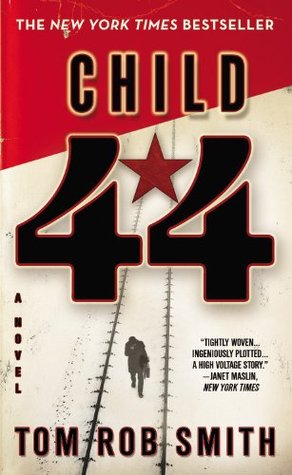
Child 44 by Tom Rob Smith
Remember when you were a kid back in the 1960's-1980's?  Every bad guy in every thriller or spy movie was a Russian, in every Olympics we booed and hissed the steroid-heavy athletes, and we even had the 'hide under your desk - an atom bomb is being lobbed at us' drills in school.  Seriously, the USSR was baaaaad.  However, once 1989 hit, the wall fell down, and we actually got to see the Eastern bloc countries, we realized...maybe they're not so bad.  (Of course, the Putin-era and his Ukraine fetish has not been good for PR)  The point is, we forget how truly imprisoned the Russians were by their government; Tom Rob Smith reminds us in this stellar thriller set in 1953 Russia.  Leo, the main protagonist and proud member of the MGB secret police, does his job willingly - arresting, interrogating, and sending away anyone who is perceived as 'guilty.' His school teacher wife is a bit of a cipher, as is their relationship.  However, once a strange murder of a little boy is discovered and Leo sees the work of a serial killer, their lives take a variety of turns, none of them particularly positive.  As Leo goes from war-hero to alienated policeman, he is compelled to find this killer and more deeply explore the relationship with both his country and his wife.  The beauty of this book is that it is not only a complex and frightening mystery, it also gives us a thoughtful look into what Russia used to be like.  I give this one a rousing five stars.

Leaving Time by Jodi Picoult
Picoult, the consistently best-selling author, is at times problematic for me.  She can pull me in with fantastic story lines as she did in Nineteen Minutes (provoking book on a school shooting) and The Story Teller (Nazi war criminal hiding in middle America), and then lose me in The Tenth Circle (too stupid to bother explaining).  However, in Leaving Time, I was fascinated by a very different story line that definitely made me keep reading until the shocking ending.  The main characters are Alice, a zoologist who seemingly knows everything there is to know about elephants, and her daughter Jenna, a thirteen year old, sassy redhead who wants to know why her mother disappeared and never returned ten years ago.  The story also includes a rather grumpy, drunken, middle-aged policeman and a hilarious new-age psychic, down on her luck after hitting it big in Hollywood, all with compelling voices.  I learned some very interesting facts about elephants (Picoult definitely did her research) and was highly entertained.  Be prepared for some wild twists and turns at the end that were creative and well done, in my opinion.  Great book:)


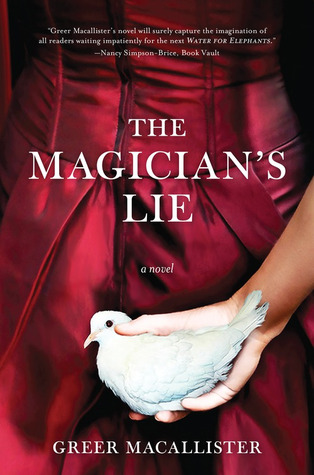
The Magigician's Lie by Greer Macallister
The people of the post-Civil War in America seemed to be quite fascinated with magic and illusions - perhaps it was their way to escape the reality of the death and destruction.  Greer Macallister has written a very solid debut novel about the life of one such illusionist as she tells her story to a quirky little policeman who has captured her after she has allegedly killed her husband.  The 'Amazing Arden' begins at her beginning: her childhood with her mother's escape from overbearing parents into a life of poverty; her budding relationship with either the love of her life or a charlatan; the mentor she finds in a wily old illusionist who fools thousands of people; and the constant cloud of her creepy step-cousin hanging over her.  Macallister embues this book with a sprinkling of magic, mystery, and historical tidbits about the life of a magician long ago.  I found it a compelling and fascinating read.


Lillian on Life by Alison Jean Lester
This rather autobiographical book is getting quite a bit of buzz out on the reading blogosphere so I thought I'd give you my lowly opinion - I was not a fan.  Lillian is a middle-aged woman who looks back on her youth with some wit and sassiness, but I found too much arrogance and self-satisfaction than I did any 'life lessons.'  Lillian recounts her college days, her long-term affair with a married man, illness, family, etc. in short, succinct chapters.  It is a quick read - that is one positive I can recount.  Some of the chapters are entertaining and humorous, but it reminded me of Edna St. Vincent Millay's poem of the tree metaphor and all the birds/lovers who have come and gone.  Everyone makes choices - I don't really want to read a book that whines and brags about some of those choices.  However, it could be an interesting book to discuss at a book club and its brevity is a plus in this world of 500 page books.

The Little Friend by Donna  Tartt
If you have not heard of Tartt's latest book, The Goldfinch, you've been hiding under a rock this past year; it won a Pulitzer and numerous accolades.  Since reading it last winter, I have gone back to her previous two books The Secret History (fabulous re-do of a Lord of the Flies type of story set in college days) and her very first book, The Little Friend, from 2002.  I understand why she takes so long between books - each is a tome of more than 500 pages.  However, Tartt is a master of the written word; even when you'd like to hire her a new editor to slash a hundred pages, the compulsion to keep reading exists.  Rightfully compared to To Kill a Mockingbird, this book has a number of similarities:  the black housekeeper who watches the two children left behind after the murder of their older brother; the quirky and humorous elderly aunts who help to raise the youngest daughter; some dark and intriguing neighbors in their small southern town; and most importantly, a brash, smart, sassy independent little girl and her sidekick friend Hely who attempt to solve the aforesaid murder of her now infamous brother, Robin.  However, the outer appearance of similarities are just that...outer.  As with all Tartt novels, she delves into the dark, deep, hidden parts of the human soul and reveals the ugliness within.  None of these characters shine with the beautiful humanity of Harper Lee's Maycomb characters (there is no Atticus Finch).  At times you will despise each character for their selfishness or cowardice, but the complexity of their choices and the deepening mystery of Robin's murder will force you to keep turning pages.  Will you be satisfied in the end?  Unclear.  But my bet is you will be as intrigued and fascinated as I was.

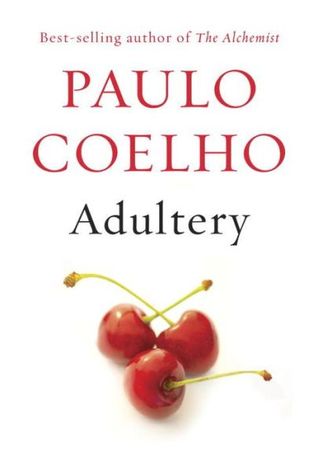
Adultery by Paulo Coelho
Our latest book club read, I was less than thrilled with the choice, as I was one of the minority in the world not enamored with Coelho's The Alchemist.  However, the story line was so different I figured I wouldn't be bombarded with a long allegory and a preachy voice.  I was half right.  The plot line is straight forward with no metaphorical language or fantastical characters.  Linda has the perfect life in Geneva, Switzerland - she's beautiful and smart, has a rich, handsome husband and two perfect children, but surprise, surprise - she's unhappy, poor girl.  When an old boyfriend returns to her life, we get a 'Fifty Shades of Crap - oops, I mean Grey' kind of story.  Oh, and let's not forget the painfully long preachy voice from Coelho, about love and what is important about life.  Perhaps I would have been more open to the 'lessons' if he had not painted such patently unsympathetic characters.  I found nothing redeemable in Linda, and the boyfriend was no better.  Blech...not a fan.  While it may provide for some interesting book club conversation, my bet is other stories of love, adultery, the stresses of marriage, etc. could do the same thing in a more elegant, literary way.

Doctor Death by Lene Kaaberbol
Admittedly, I just like the title.  Seriously, how fun is it to tell friends I'm reading Doctor Death, especially when they all know I'm obsessed with creepy murder mysteries, especially by ones from Scandinavian writers? This is the first in a new series by Kaaberbol, a Danish writer from Copenhagen, who sets her story in a French province that borders Germany, during the turn of the century when woman were 'owned' by parents or husbands, educational opportunities were few and far between for young girls, and the idea of working with forensics was a view into the future.  Madeleine Karno is a twenty year old girl who eavesdrops on her father's work as a pathologist, soon to be drawn into his world as an accident sidelines him and he needs his daughter to do his investigating.  A young girl has been found dead, and her death leads to subsequent violent deaths in their small provincial town.  Add in a nerdy German insect scientist, some big scary wolves, a few Catholic nuns, and a good mystery is born.  Kaaberbol sets up the ending nicely for her subsequent sequels; I look forward to reading more about the independent, intelligent, driven young Madeleine Karno.

Friday, February 6, 2015

Being Mortal: Medicine and What Matters in the End by Atul Gawande
This is a pretty personal book for me so be forewarned:  this non-fiction book is scary, depressing, inspiring, frustrating, and ultimately life-changing, depending on what chapter you are reading and what stage you are in your own life.  For me, turning fifty-two hasn't been a huge change; I'm physically active and shockingly healthy after living in the cesspool of public-school teaching for many years.  However, over the last nine years, I have participated in my father's death and all the tasks that led up to it - numerous doctor visits after a cancer diagnosis, learning to be the best note-taker, communicator, and advocate for my father that I could be, and dealing with the details of his death. Now, as my mother ages, becoming less and less the mother of my youth, I feel the emotional stress as I watch her move from her own home, to a retirement apartment, to assisted living; I experience the brief flashes of her memory that come far less frequently; and I find myself questioning what we do here in our culture for our parents - is it best for them or for us?  Dr. Atul Gawande, a Boston general surgeon, takes all of these ideas of mortality and looks at them piece by piece.  He intersperses anecdotal stories of dying young people, slowly deteriorating elderly couples, and even his own father to help personalize the journey of where medicine has been in our care of morality, and the possibilities for the future.  It is a supremely compelling read, and while aggravating and disheartening at times, it made me question my choices for my mother in a healthy way.  In the long run, I hope it will help me be a stronger advocate for her quality of life.  I cannot recommend this book highly enough - it is a must-read.

The Girl on the Train by Paula Hawkins
If you're like me, I am sick to death of hearing "This is the next Gone Girl!"  Newsflash ...Gillian Flynn cannot be replicated - she is capable of writing brilliant prose plus she sucks you into her own freaky mind games in a complex and thought-provoking manner.  However, with that said, Girl on the Train is a very solid thriller that definitely keeps one turning the pages.  Told from the perspective of a few different characters, it jumps through time as it relays how a young wife disappears from her small London suburban bungalow.  Rachel is the most prevalent narrator.  Her life is a disaster, seriously.  A young, recently divorced young woman who has nothing going for her - she's a drunk, she likes to make late night inebriated phone calls to her husband and new wife, she's unemployed, and she lives in a friend's spare room.  As she pretends to go to work each day on the train into London, she fantasizes about the young couple she sees in the cottage next to the train line. One night, this young woman vanishes and Rachel seems to get herself wrapped up in the whole bloody mess.  A mystery fanatic should be able to figure out 'whodunnit' by the last quarter of the book, but who knows?  It is a compelling read until the very last page.

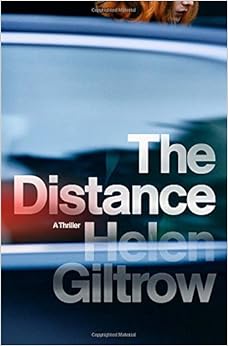
The Distance by Helen Gitrow
Remember Robert Ludlum from back in the 1980's?  He was the master of government thrillers, espionage, and murder, all wrapped up in a complex and sometimes confusing plot line.  Helen Gitrow seems to have taken his recipe for her first outing into the world of mystery.  She has created a futuristic London, which is not all the futuristic; the only difference being they have come up with a new prison system where they block off a few streets and create a neighborhood for the worst of the worst.  Enter our protagonist, the beautiful socialite Charlotte, or known by her alter-ego, Karla; the woman is the techie wizard who creates any identity you want and gets you anywhere you want to go.  A man from her past wants into this new neighborhood prison - it will take you the entire book to figure out why.  Gitrow explores  the high-tech world of crime and how it has changed the way the bad guys can conduct their business.  However, my memory of Ludlum was that he could also create compelling characters that were rich and developed; I did not find that with Gitrow.  The book is heavily plot driven, with little character development into their motivations and pasts; I would have liked more.  If you like complex and confusing, this is the book for you.  Me, I like my mysteries a bit more richly drawn.
Three Wishes and The Last Anniversary by Liane Moriarty
Having read What Alice Forgot, Big Little Lies, and The Husband's Secret, I figured all of her books were compelling page turners; I was mostly right.  Let's starts with Three Wishes.  Honestly, it's a hoot!  The story begins with the three main characters, the Kettle triplets, celebrating their 34th birthday.  That first chapter ends with the pregnant triplet looking at the fondue fork sticking out of her stomach, another triplet bloodied from passing out and breaking her jaw on the restaurant table, the third triplet calming calling for help, and the other customers all aghast at what they have seen.  Hence begins the flashbacks to the triplets' lives...filled with parental divorce, spousal cheating, an abusive boyfriend, and all the travails of these hilarious, wickedly mean at times, and engagingly tight-knit sisters.  Listening to the book obsessively, I laughed out loud frequently and occasionally commiserated with the nasty things life threw at them.  It was just an awesome read.  Now, I cannot say the same for The Last Anniversary.  Based around the most sickeningly perfect protagonist, Sophie, who I just wanted to slap most of the time, the story takes place on a small island off the coast of Australia.  A mystery of an abandoned baby long ago has fueled a lucrative commerce on the island and Sophie is pulled in when the main house is left to her unexpectantly.  All the signs of a compelling story yet I just wanted to say "blech" at the end.  All the characters are so two-dimensional, and not particularly likable, the plot line is dreadfully predictable, and the writing is rather blase.  Thank goodness Moriarty learned as she went along and wrote more books.  This one is an example of a first novel to forego.